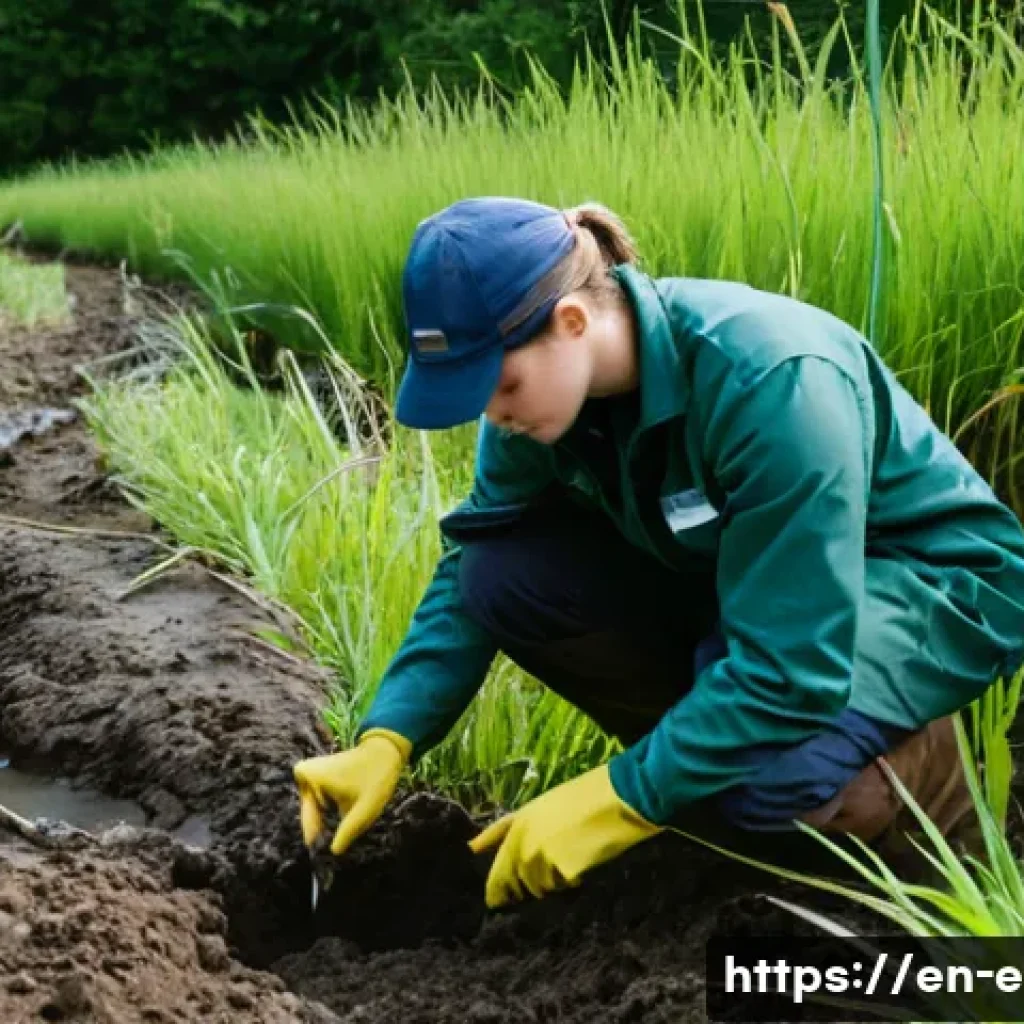
Hey there, future environmental champions! Ever felt that thrilling mix of excitement and nerves imagining yourself on the front lines, tackling critical sustainability challenges?
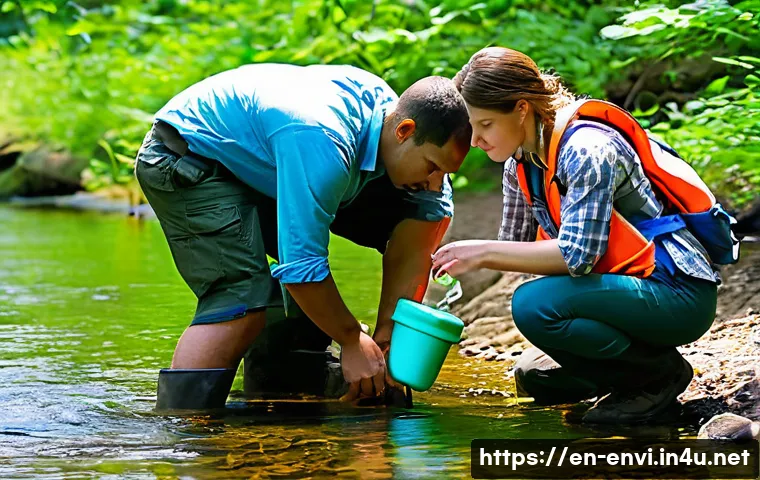
Well, that dream often hinges on a crucial step: acing those rigorous professional certification exams. I totally get it – the practical assessments, in particular, can feel like navigating a dense jungle, full of unexpected twists and turns.
It’s not just about textbook knowledge anymore; it’s about demonstrating you can actually *do* the job, apply those principles in real-world scenarios, and truly make a tangible difference in our increasingly green world.
The demand for qualified, hands-on environmental professionals is absolutely skyrocketing, and standing out means mastering these essential hurdles. Trust me, I’ve seen countless brilliant minds stumble, not because they lacked knowledge, but because they overlooked those tiny, yet critical, details in the practical portion.
It’s like having all the right ingredients but forgetting that one secret spice! So, if you’re gearing up for your environmental professional certification and want to conquer those common pitfalls with absolute confidence and precision, you’ve landed in the perfect spot.
Let’s dive deep and uncover the ultimate strategies to ace your environmental practical exam!
Deconstructing the Practical Exam: What Are They *Really* Testing?
Alright, my fellow eco-warriors, let’s get real about these practical exams. When I first started out, I honestly thought it was just about memorizing regulations and knowing my flora from my fauna.
Boy, was I wrong! It’s not just a knowledge dump; it’s a test of whether you can *think* like an environmental professional. They’re trying to see if you can take that textbook knowledge, filter it through a real-world lens, and actually apply it to solve a problem.
It’s like they’re putting you in a simulated situation and whispering, “Okay, hotshot, what do you do now?” They want to observe your problem-solving process, your critical thinking, and your ability to make sound judgments under pressure.
It’s less about the “what” and more about the “how” and “why” behind your actions. From my own experience, the biggest hurdle for many isn’t a lack of information, but a lack of understanding how to deploy it effectively and practically in a dynamic environment.
You’ve got to show them you’re not just a walking encyclopedia, but a capable practitioner ready to hit the ground running.
Unpacking the Competencies: From Theory to Action
What exactly are these certification bodies looking for? It boils down to competencies, not just knowledge points. Think about it: they’re assessing your ability to perform specific tasks, identify environmental risks, collect data accurately, interpret results, and propose viable solutions.
For example, if you’re taking a wetland delineation exam, they aren’t just asking you to list hydric soil indicators; they’re expecting you to *find* them in the field, differentiate between similar soil types, identify dominant vegetation, and accurately plot the wetland boundary using appropriate tools.
It’s a multi-faceted evaluation. I recall one exam where a colleague struggled not because he didn’t know the theory, but because he couldn’t quickly identify a specific invasive plant species under real field conditions.
It’s about bridging that gap from abstract concept to tangible reality, and it requires a different kind of preparation than just rote memorization. They want to see you operate as if you were already on the job.
The Hidden Curriculum: Beyond the Syllabus
Beyond the explicitly stated objectives, there’s a “hidden curriculum” in these practical exams. This includes things like your communication skills – how you articulate your observations and recommendations, even if it’s just to an examiner.
It’s also about your safety awareness, your ethical considerations, and your ability to work independently while adhering to best practices. I’ve seen points deducted not for incorrect data, but for poor organization of equipment or a lack of attention to detail during a sample collection.
They’re looking for a holistic professional, not just a technical expert. My personal anecdote here is observing someone lose points because they failed to properly label a sample bottle, which, in the real world, could invalidate critical data.
These subtle elements, often overlooked in study guides, are paramount to demonstrating true professionalism and trustworthiness.
Hands-On Practice is Your Best Friend: Simulating Real-World Scenarios
Let me tell you, when it comes to practical exams, “winging it” is a recipe for disaster. My biggest piece of advice, something I learned the hard way after a particularly humbling experience with a water quality sampling assessment, is that there’s simply no substitute for getting your hands dirty.
You need to simulate the conditions of the exam as closely as possible. If the exam involves using a specific piece of equipment, go find it and practice with it until it feels like an extension of your arm.
If it’s about identifying species in the field, spend hours – and I mean *hours* – out there, getting to know the local flora and fauna. This isn’t just about memorizing names; it’s about developing an intuitive understanding of the environment you’ll be working in.
Think of it as muscle memory for your professional skills. The more familiar you are with the actual tasks, the less anxiety you’ll feel on exam day, and the more confidently you’ll perform.
It really makes all the difference when you’re under the clock.
Building Your Home Lab (or Field Kit!)
You might not have access to a fully equipped environmental lab, but you can certainly create a mini version! For example, if your exam involves soil analysis, get some soil samples from different locations – your backyard, a local park, a friend’s garden – and practice your texture analysis, pH testing, and even basic nutrient tests.
If it’s about water quality, grab some simple test kits for parameters like pH, dissolved oxygen, or turbidity. For field identification, invest in a good regional field guide and start observing.
My own “home lab” started with a simple magnifying glass and a shovel, but it allowed me to practice basic soil horizon identification and plant morphology without the pressure of an actual exam.
It’s about demystifying the tools and techniques before the big day, so you’re not fumbling when it counts. Familiarity breeds confidence, and confidence is half the battle won.
Collaborative Learning: Study Groups and Mentorship
While solo practice is crucial, don’t underestimate the power of a good study group or, even better, a mentor. When I was preparing for my Certified Hazardous Materials Manager (CHMM) exam, joining a study group made a world of difference.
We’d set up mock scenarios, quiz each other on protocols, and critique each other’s approaches. Sometimes, seeing someone else make a mistake (and learn from it!) is just as valuable as making your own.
If you can find an experienced professional in your field who’s willing to offer guidance, that’s pure gold. They can provide insights into common practical challenges, share tips they’ve learned over years in the field, and even help you understand the nuances of what examiners are looking for.
Their “been there, done that” wisdom can often illuminate aspects you’d never find in a textbook, giving you a serious edge.
Navigating the On-Site Challenge: Observation and Documentation
When you’re out in the field during a practical exam, it’s not just about doing tasks; it’s about seeing, interpreting, and recording. This is where many candidates stumble because they rush through the observation phase or fail to document their findings systematically.
I remember an exam where a colleague meticulously followed all the sampling procedures but neglected to properly describe the context of the sampling site – things like weather conditions, nearby disturbances, and peculiar odours.
These seemingly minor details are crucial in environmental science because they can significantly influence your data interpretation and the conclusions you draw.
It’s not enough to just collect data; you have to paint a complete picture of the situation. They’re looking for your ability to act as a thorough and reliable data gatherer, someone who understands that every detail can matter.
Sharpening Your Senses: The Art of Environmental Sleuthing
Think of yourself as an environmental detective. You need to engage all your senses (safely, of course!). What do you see?
Are there signs of erosion, unusual plant growth, or discolored water? What do you smell? Is there a sulfurous odor indicating anaerobic conditions, or a chemical scent suggesting a spill?
What do you hear? The sounds of healthy wildlife, or the unnatural hum of machinery? These observations, often qualitative, are just as important as your quantitative measurements.
I once identified a potential groundwater contamination issue during an assessment purely because of a subtle, metallic smell near a stream that I wouldn’t have noticed if I hadn’t been actively engaging my sense of smell.
Train yourself to pay attention to the subtle cues the environment is giving you; they often tell a much richer story than just a number on a meter.
The Power of the Pen: Effective Field Notes and Reporting
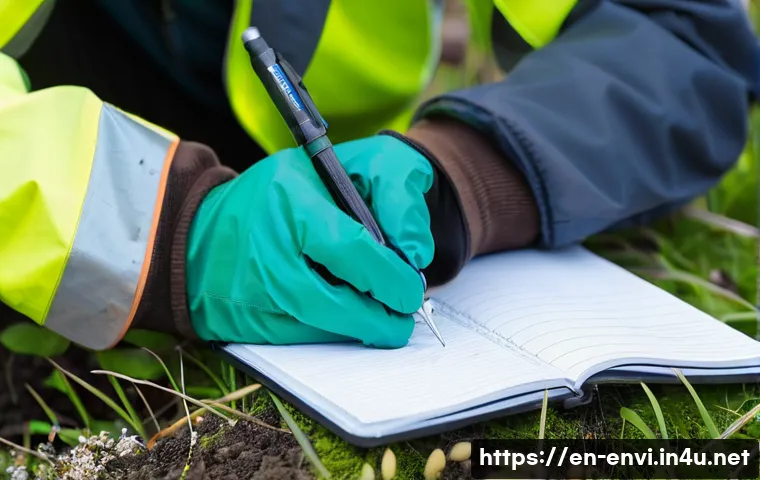
Your field notes are your memory and your defense. Clear, concise, and comprehensive documentation is absolutely paramount. This includes not just your measurements, but also your observations, the time, date, weather, equipment used, and any deviations from standard protocols.
Imagine trying to reconstruct your findings weeks later without detailed notes – it’s a nightmare! For the exam, your ability to organize and present your raw data and observations will be a significant part of your score.
They want to see that you can record information accurately and logically, making it easy for anyone to understand your process. I always recommend developing a standardized field notebook system before the exam.
My personal go-to is a waterproof notebook with pre-printed templates for common data points; it saves time and ensures consistency.
Overcoming Exam Day Jitters and Time Traps
Let’s be honest, everyone gets nervous on exam day. My hands would sweat, my heart would race, and sometimes my mind would just go blank for a second.
It’s totally normal! But letting those nerves take over can sabotage even the most well-prepared candidate. It’s not just about having the knowledge; it’s about being able to access and apply that knowledge under pressure.
The clock ticking, the examiner watching, the unfamiliar environment – it can all contribute to a mental block. Learning to manage these jitters and strategically use your time is a skill unto itself, one that you absolutely *must* practice.
I’ve seen brilliant people stumble not because they didn’t know the answer, but because they panicked and couldn’t articulate their process or ran out of time before completing a critical step.
Don’t let that be you!
The Pre-Exam Ritual: Mental Prep and Logistics
Just like an athlete prepares for a big game, you need a pre-exam ritual. This isn’t superstition; it’s about establishing a routine that calms your mind and optimizes your performance.
For me, it always involved a good night’s sleep, a healthy breakfast, and a quiet review of key procedural steps rather than trying to cram new information.
More importantly, it meant knowing all the logistics cold: how to get to the site, what I needed to bring (ID, equipment, snacks, water), and where the facilities were.
Eliminating any last-minute stress points frees up valuable mental bandwidth for the actual exam. Arriving early, getting acquainted with the exam setting, and taking a few deep breaths can make an incredible difference in how clear-headed you feel when the “go” signal is given.
Time Management Tactics: Pacing Yourself for Success
Time is your most precious resource during a practical exam, and it flies by. Before you even start, take a moment to read *all* the instructions and mentally allocate your time.
If there are multiple stations or tasks, estimate how long each one should take and stick to your plan. Don’t get bogged down trying to perfect one section if it means sacrificing another.
For instance, if you have 60 minutes for three tasks, aim for 20 minutes per task, and keep an eye on the clock. It’s better to complete all sections adequately than to ace one and completely bomb another because you ran out of time.
My personal hack is to wear a simple, analog watch during exams. Constantly checking my phone would be a distraction, but a quick glance at my wrist helps me stay on track without breaking my focus.
This disciplined approach to pacing will ensure you present a complete and coherent demonstration of your skills.
Essential Tools and Resources Every Future Pro Needs
You wouldn’t expect a carpenter to build a house without a hammer, right? The same goes for environmental professionals. Having the right tools, and more importantly, knowing how to use them proficiently, is non-negotiable for both the exam and your future career.
This isn’t just about expensive gadgets; sometimes the simplest tools are the most crucial. Beyond physical equipment, access to reliable information and professional networks can also be considered “tools” in your arsenal.
Think of your exam preparation as building a comprehensive toolkit – not just for passing the test, but for empowering your entire professional journey.
Skipping out on understanding your tools is like showing up to a race without checking your tires.
Must-Have Gear for Field Assessments
While specific gear will vary by discipline, there are some universal items you’ll almost certainly need or find incredibly useful. A good quality field notebook (waterproof!), appropriate writing instruments, a sturdy pair of work boots, safety glasses, gloves, and a reliable compass or GPS are often foundational.
Depending on your specialization, you might also need specific meters (pH, dissolved oxygen, conductivity), sampling equipment (soil auger, water sampler), or identification guides.
The key isn’t just owning them; it’s being comfortable and efficient with them. Practice handling them, calibrating them if necessary, and maintaining them.
I made the mistake once of showing up to a soil sampling practical with a rusty auger that kept getting stuck. Lesson learned: always check your gear beforehand!
Digital Aids and Reference Materials
In today’s world, digital tools are just as important as physical ones. Many environmental professionals rely on apps for GIS mapping, species identification, or data collection.
Knowing how to quickly access and interpret digital reference materials – like regulatory databases, technical manuals, or scientific papers – can save you crucial time and enhance the accuracy of your work.
While you might not be allowed to use personal devices during the exam, understanding *how* to quickly find information is a skill that will serve you well.
Consider bookmarking key online resources during your study period, so that after the exam, when you’re on the job, you know exactly where to turn for quick answers.
Here’s a quick overview of common certifications and their focus areas:
| Certification Name | Typical Focus Areas | Common Practical Skills Assessed |
|---|---|---|
| Certified Environmental Professional (CEP) | Broad environmental management, policy, compliance, project management. | Case study analysis, problem-solving, regulatory interpretation, report writing. |
| Certified Hazardous Materials Manager (CHMM) | Hazardous waste management, safety, regulatory compliance, risk assessment. | Hazard identification, waste classification, emergency response planning, sampling protocols. |
| Wetland Delineation Certification | Wetland identification, boundary determination, ecological assessment. | Soil boring, vegetation identification, hydric soil identification, GPS mapping. |
| Stormwater Management Certification | Stormwater pollution prevention, erosion control, Best Management Practices (BMPs). | Site inspection, BMP effectiveness assessment, runoff calculation, permitting review. |
| Certified Professional in Erosion and Sediment Control (CPESC) | Erosion and sediment control principles, planning, design, and implementation. | Site assessment for erosion potential, design of control measures, inspection of BMPs. |
The Post-Exam Playbook: Learning, Growing, and Moving Forward
Okay, you’ve done it! The exam is over, and whether you feel like you nailed it or completely fumbled, the journey isn’t truly over. Many people just breathe a sigh of relief and forget about the experience, but that’s a missed opportunity for growth.
Regardless of the outcome, the period immediately following a practical exam is incredibly valuable for self-assessment and continuous learning. I always treat it like a mini-project debriefing.
What went well? What could have been better? This reflective practice is crucial not just for passing the next time if needed, but for becoming a truly exceptional environmental professional.
Trust me, every single experience, especially the challenging ones, holds valuable lessons if you take the time to unpack them. It’s how you refine your instincts and sharpen your skills for the long haul.
Debriefing Your Experience: What Went Right (and Wrong)
As soon as possible after the exam, while it’s still fresh in your mind, sit down and make notes. What were the toughest questions? Which tasks did you feel most confident about?
Were there any surprises, either in the content or the setup? Did you manage your time effectively? Be honest with yourself.
This isn’t about beating yourself up; it’s about identifying areas for improvement. For instance, after one particularly grueling practical on groundwater sampling, I realized I needed to improve my knot-tying skills for lowering equipment into wells – a seemingly minor detail that became a major time sink.
Documenting these specific points helps you learn from your mistakes and build a stronger foundation for future challenges, whether it’s another certification or a real-world project.
Continuous Improvement: Staying Sharp in a Dynamic Field
The environmental field is constantly evolving. New regulations emerge, technologies advance, and our understanding of ecosystems deepens. Passing an exam is fantastic, but it’s just one milestone.
To maintain your edge and remain a truly valuable professional, you need to commit to continuous learning. This could mean attending workshops, reading industry publications, pursuing advanced certifications, or even just staying updated on environmental news.
Your practical skills can also rust if not used. Look for opportunities to apply what you’ve learned, whether through volunteer work, personal projects, or seeking out diverse assignments in your job.
Staying engaged and curious is the hallmark of a true expert, and it ensures that your environmental knowledge and skills remain cutting-edge for years to come.
Wrapping Up
So, there you have it! Practical exams aren’t just about regurgitating facts; they’re about demonstrating your ability to think, act, and document like a true environmental professional.
Embrace the challenge, get your hands dirty, and remember that every experience, whether a success or a stumble, is a valuable opportunity to grow. Equip yourself with the right tools, hone your senses, and trust in your preparation.
Handy Tidbits to Keep in Your Back Pocket
1. Master the Art of Observation: Pay close attention to the subtle cues in your environment—smells, sounds, visual indicators—they can reveal critical insights.
2. Build a Home Lab: Practice basic field techniques in your backyard or local park to build familiarity and confidence with essential tools and procedures.
3. Collaborate and Learn: Join a study group or seek mentorship from experienced professionals to gain diverse perspectives and insights.
4. Document Everything: Maintain clear, concise, and comprehensive field notes that capture not just measurements but also contextual observations and deviations from protocols.
5. Manage Exam Day Jitters: Develop a pre-exam ritual to calm your mind, familiarize yourself with the exam setting, and strategically allocate your time.
Key Takeaways
Practical environmental exams are designed to evaluate more than just your theoretical knowledge; they assess your ability to apply that knowledge in real-world scenarios.
Hands-on practice, including creating a home lab and simulating exam conditions, is crucial for building confidence and proficiency. Collaboration with study groups or mentors can provide invaluable insights and perspectives.
Effective observation and documentation skills are essential for gathering and presenting accurate data. Finally, managing exam day stress and time effectively are key to demonstrating your capabilities under pressure.
Remember, preparation, practice, and a cool head are your best allies in conquering any practical exam.
Frequently Asked Questions (FAQ) 📖
Q: What’s the absolute best way to prepare for the hands-on, practical parts of the exam? Classroom knowledge is one thing, but actually doing it feels like another challenge entirely!
A: You’ve hit on such a crucial point! It’s one thing to read about soil sampling, and another to actually conduct it properly in varying conditions.
My absolute top advice for the practical component is simulated field experience. If your program offers labs or field sessions, treat them like mini-exams.
Don’t just follow instructions blindly; try to understand the why behind each step. Get your hands dirty – literally! I’ve found that many candidates benefit immensely from volunteering or interning in roles where they get to apply these skills.
Even a few days shadowing an experienced professional can reveal nuances you won’t find in any textbook. Think about it: handling a real water quality meter, calibrating it correctly, and understanding its limitations in the field is miles away from watching a YouTube tutorial.
Also, if your certification board offers practice scenarios or equipment demos, jump on them. They are gold! What I always tell people is to identify the core practical skills listed in your exam syllabus – maybe it’s environmental sampling, data collection using specific software, or site assessment techniques – and then actively seek out opportunities to practice those exact things.
You’ll build muscle memory and confidence, which is priceless when the pressure is on.
Q: During the practical exam, what’s the biggest mistake people commonly make, and how can I avoid falling into that trap?
A: Oh, this is a fantastic question, and one I wish more people considered! From what I’ve observed, the single biggest pitfall is rushing and not meticulously following instructions or safety protocols.
It sounds simple, right? But under pressure, our brains can sometimes play tricks. I’ve seen brilliant folks, completely knowledgeable, get flustered and skip a crucial calibration step, mislabel a sample, or forget a piece of PPE, which can instantly lead to a ‘fail’ or significant point deductions.
My personal hack for this? Slow down. Before you even touch equipment or start a task, take a deep breath.
Read the instructions twice, maybe even three times. Visualize the entire process from start to finish. Check off each step mentally, or if allowed, even with a quick physical checklist.
I always advise candidates to imagine they are training a brand-new intern – would you let them skip steps? Absolutely not! Pay hyper-attention to detail, especially regarding safety equipment, proper documentation, and precise measurements.
Remember, in environmental work, a small oversight can have huge, real-world consequences, so examiners are looking for that methodical, safe approach.
Your calm, deliberate actions will speak volumes about your professionalism.
Q: What if something unexpected happens during the practical exam, like equipment malfunctioning or a scenario that wasn’t exactly covered in my prep materials? How do I handle that gracefully and effectively?
A: This is where your true environmental professional skills shine through! Honestly, unexpected situations are part and parcel of fieldwork, so examiners often intentionally throw in curveballs to see how you adapt.
The worst thing you can do is panic or give up. My advice here is twofold: stay calm and communicate effectively. First, if equipment malfunctions, do not try to “fix” it on the fly unless specifically instructed and trained to do so.
Your priority is safety and accurate data. Immediately and calmly inform your assessor about the issue. Clearly describe what happened and what you believe the problem is, demonstrating your understanding.
They’re looking for your problem-solving process and communication skills, not necessarily for you to be a technician. I remember a time a student’s pH meter inexplicably died mid-test.
Instead of freaking out, she calmly stated, “My meter appears to be unresponsive. I’ve checked the batteries and connections, and it’s still not functioning.
What would be the next step in this scenario?” That showed critical thinking and professionalism, which is what they want to see. Secondly, for an unexpected scenario, lean on your foundational knowledge and critical thinking.
Assess the situation, identify potential risks, and propose a logical course of action based on best practices, even if it’s not the ‘perfect’ solution.
Show them you can think on your feet and prioritize. Often, there isn’t one “right” answer, but rather a demonstrating of sound judgment and adaptive problem-solving.
This kind of resilience and smart thinking isn’t just about passing the exam; it’s what makes you a truly valuable environmental professional in the field!